September 28, 2026
I Thought I Was Healthy… Until Prediabetes Changed Everything
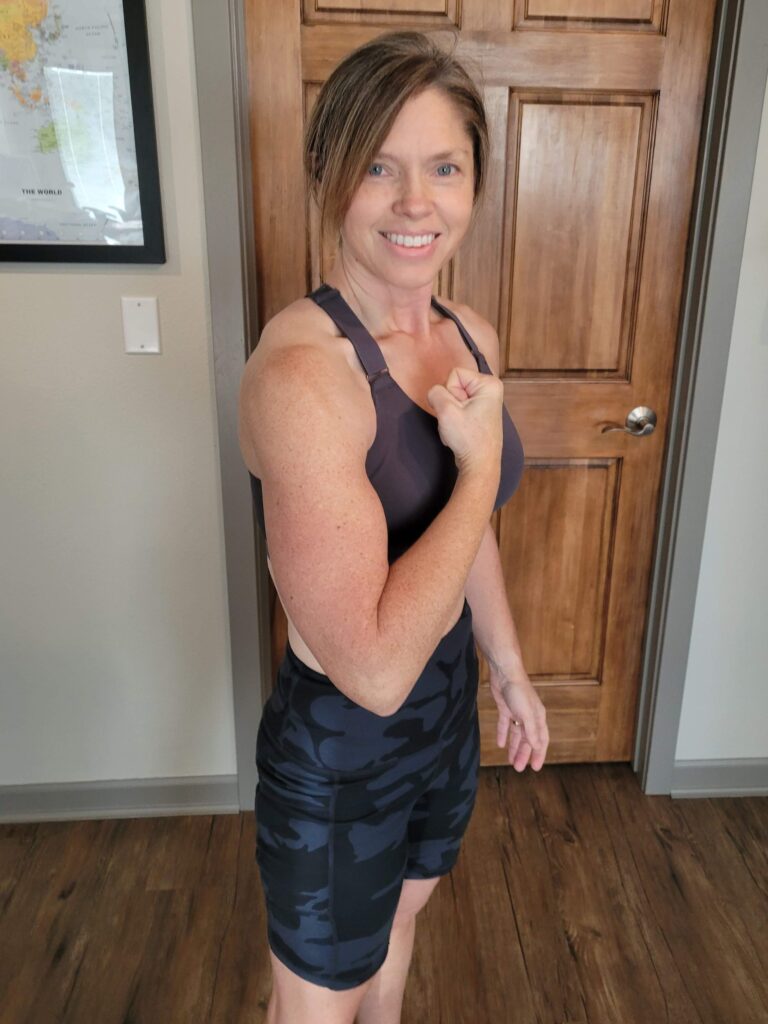
I was in the best shape of my life when I developed prediabetes while eating healthy and exercising twice a day.
Yep. Prediabetes. As a nurse. While eating “clean.” While exercising twice a day.
Not exactly how I thought that story was supposed to go.
For about 18 months, I had been incredibly disciplined with my health. I ate a clean, lower-carb diet, hit my macros, and exercised every day — twice a day. And I felt pretty accomplished.
I was checking all the boxes. Healthy food? Check. Exercise? Definitely check. Productive day? Oh, you better believe that was checked.
I was a professional to-do-list conqueror. And I leaned into doing hard things. My mentality was basically:
There are 24 hours in a day. Let’s use ALL OF THEM. 😄
From the outside, it looked like I was doing everything right.
Then my routine bloodwork came back.
My A1c had moved into the prediabetes range. Before those 18 months of “healthy living,” my A1c had been in the normal range.
Wait…what?
When “Healthy” Habits Aren’t Working
I remember wondering: What am I supposed to do now?
Eat even cleaner? Exercise even more? Cut more carbs? Try harder?
I was already doing all the things I thought I was supposed to do. And my body wasn’t responding the way I expected.
There were other clues, too. I was dealing with injuries that weren’t healing well. I had sugar cravings. And despite looking healthy on the outside, something clearly wasn’t balanced on the inside.
That prediabetes diagnosis became a turning point for me. Because eventually I began to understand something that changed not only my health, but the way I now help other people:
Doing more isn’t always the answer.
Sometimes the body doesn’t need more pressure. It needs more support.
I Had Confused Discipline With Wellness
I love getting things done. Give me a list and a pen, and I am a happy girl.
There’s nothing wrong with being productive. But I had developed a pretty constant go, go, go mentality.
Finish this. Do that. What’s next?
And every checked box gave me that little feeling of accomplishment. The problem was that my body didn’t necessarily interpret my packed days as, “Wow, look at us thriving!”
My body needed recovery. It needed rest and nourishment. And my soul needed some quiet, too.
I began realizing that rest isn’t something we earn after we’ve finished everything else.
Because, seriously…when is everything else actually finished? There’s always another load of laundry. Another email. Another weed in the garden.
Rest is part of caring for our bodies. And I believe it’s part of caring for the life God has given us, too.
“Clean Eating” Wasn’t the Same as Nourishing My Body
I truly believed I was eating well. And in many ways, I was.
I wasn’t living on doughnuts and soda. Instead, I intentionally chose foods I believed were healthy, ate lower carb, and consistently hit the macros I had set for myself.
On paper, it looked great.
But I eventually learned that hitting a macro target, a number on the scale, or even a body fat percentage aren’t the same as giving your body what it needs.
I wasn’t eating in a way that best supported my blood sugars. And I wasn’t getting the variety of nutrients my body needed to support healing and a balanced gut microbiome.
That’s an important distinction. Because food isn’t simply carbs, protein, and fat. It’s vitamins, minerals, fiber, phytonutrients, and nourishment for the trillions of organisms living in our gut that play a role in our overall health.
I had spent so much energy thinking about what I needed to limit in my diet that I hadn’t paid enough attention to what my body needed me to add.
That was a big shift for me.
My Sugar Cravings Were Telling Me Something
I also began looking at my gut health differently.
Those sugar cravings weren’t simply something I needed to overpower with discipline. They were information.
My gut was out of balance. And instead of getting frustrated with my body, I started getting curious about it.
What is my body trying to tell me?
That question changed a lot.
Functional medicine taught me to stop looking at each symptom as an isolated problem. Instead, I started looking at the bigger picture: my blood sugars, my gut, my stress, my sleep, my nutrition, my inflammation, and my recovery.
They weren’t separate little boxes. They were connected.
And that meant my approach to getting healthier needed to be connected, too.
Stress Can Affect Blood Sugar, Too
Here’s another lesson I didn’t expect.
I wouldn’t have described myself as really stressed. There was no constant sense of panic. I was just… busy. Productive. Driven. Always thinking about the next thing.
It was a low-to-moderate hum of stress running quietly in the background. And I had become so accustomed to it that it felt normal.
But our bodies don’t only respond to the giant, obvious stresses in life. The constant go, go, go matters, too.
Stress hormones can affect glucose regulation. And when I combined that background stress with an imbalanced gut, inadequate recovery, and nutrition that wasn’t supporting my individual needs, I began to understand why simply eating fewer carbs and exercising more wasn’t solving the problem.
There wasn’t just one thing I needed to fix.
I needed to start looking at my body as a whole. And most importantly, I needed to start listening to it.
What Developing Prediabetes While Eating Healthy Taught Me About Real Health
Getting diagnosed with prediabetes while I thought I was in the best shape of my life was incredibly frustrating.
Still, looking back, I’m grateful for what it taught me.
It changed the direction of my life. It helped lead me deeper into functional medicine and eventually to becoming a board-certified Functional Medicine Nurse Specialist.
And it changed my definition of “healthy.”
Healthy isn’t what the scale says. It isn’t how perfectly I hit my macros. It isn’t how many things I cross off my list before bedtime.
And it definitely isn’t about doing everything perfectly.
At that point, health became about learning to support my body instead of constantly demanding more from it.
To nourish instead of simply restrict. To move, but also recover. To accomplish, but also rest.
To pay attention to my gut, stress, sleep, blood sugar, and the signals my body was sending me.
And to recognize that true wellness includes more than the body. It includes the mind and soul, too.
Maybe You Recognize Yourself in My Story
Maybe you’re eating pretty well. You’re exercising. You’re taking the supplements. You’re trying really hard to take care of yourself.
But you’re still tired. Your weight isn’t responding like it used to. You’re craving sugar. Your brain feels foggy.
Or maybe your blood work is starting to move in a direction you don’t like.
And you’re thinking:
What else am I supposed to do?
I understand that question because I’ve asked it.
But before you assume the answer is to eat less, exercise more, or add another 17 things to your morning routine… get curious.
Your body may not need you to try harder.
It may need you to understand it better.
That is a huge part of why I created Live So Well.
To me, living well isn’t about chasing perfect health. It’s about nurturing the body, mind, and soul God gave us so we have the energy and vitality to show up for the people and purpose that matter most.
And sometimes that journey begins with something as simple as asking:
What does my body need from me today?
Not what Instagram says I need. Not what worked for someone else. Not what can I restrict next. Not how much more can I do.
What does my body need?
That question helped change my health story. And it’s the question I hope Live So Well can help you answer, too.
Because you don’t need perfect. You need the right direction, a little curiosity, and the willingness to listen to what your body is telling you.
One small shift at a time.
Wondering What Your Blood Sugar Is Telling You?
You don’t have to have diabetes to start paying attention to your blood sugars.
Energy crashes, cravings, hunger, brain fog, and other everyday signals can give you clues about how your body is responding to the way you’re eating and living.
That’s why I created my free guide:
Which Foods Spike Your Blood Sugar — and Which Don’t: A Guide to Glucose for Real Life
Inside, I’ll help you understand blood sugars in plain English, make sense of glycemic index and glycemic load, and show you simple food pairings that can help support steadier blood sugars — without counting every carb or giving up all the foods you love.
Get the Free Blood Sugar Guide here
Because understanding your body is one of the first steps toward learning how to support it.
And that is what Live So Well is all about.
— Erin Palmer, RN, MS, BCFMNS
Functional Medicine Nurse & Founder of Live So Well
This article is for educational purposes only and isn’t intended to diagnose, treat, cure, or prevent any medical condition. Talk with your healthcare provider about your individual health needs.